
Introduction
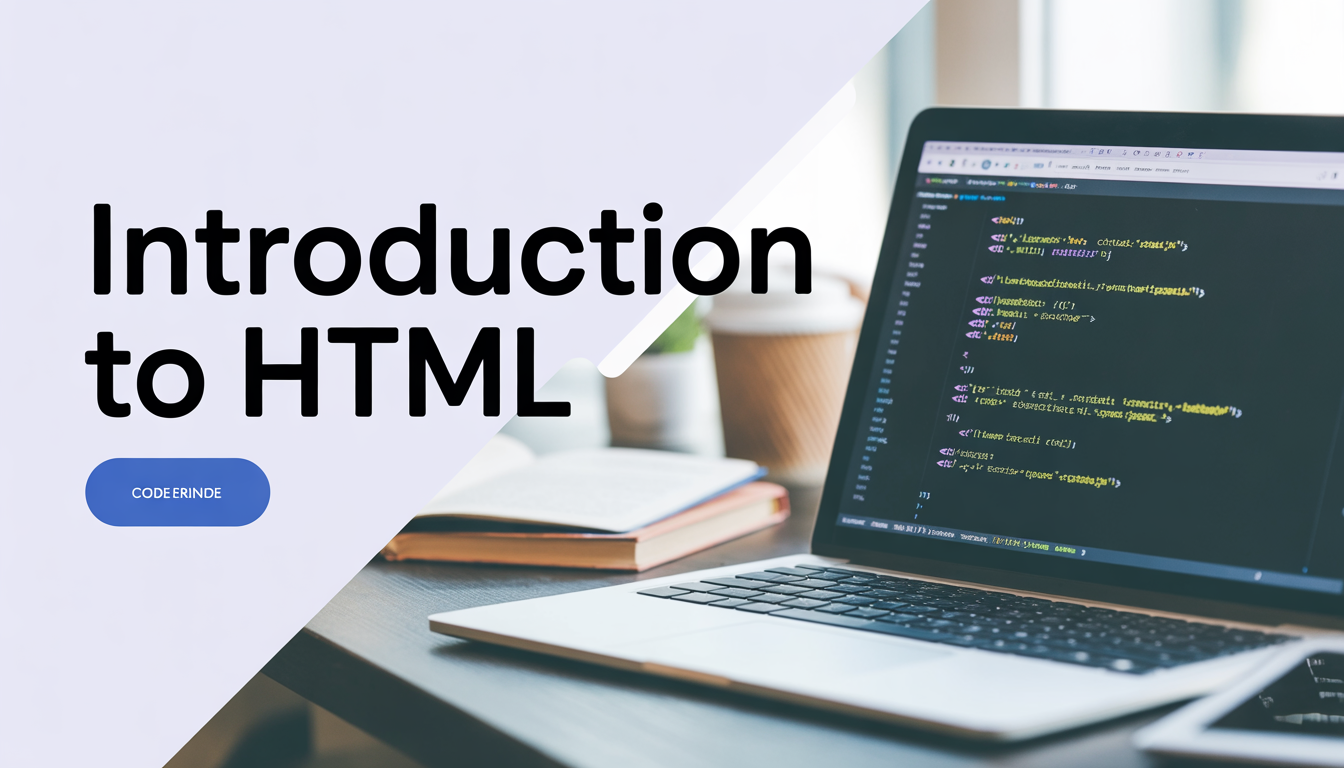
The internet is built on a language that browsers understand—and that language is HTML. If you’ve ever wondered how websites display text, images, or links, HTML is the key. For beginners in India’s growing tech scene, understanding HTML is the first step toward creating websites, apps, and interactive online experiences.
Web development can seem overwhelming, but mastering HTML provides a strong foundation for coding, design, and digital projects.
What is HTML?
HTML (HyperText Markup Language) is the standard language used to create and structure content on the web. It tells browsers how to display text, images, links, and other elements, acting as the skeleton of every webpage.
In short: HTML structures content, while CSS and JavaScript style and add functionality.
Why HTML Matters & Who Benefits
HTML is essential for anyone involved in web development, digital marketing, or tech design. Key user groups include:
- Beginner developers – Learn the foundation of web creation.
- Web designers – Structure content effectively before styling.
- Digital marketers – Understand webpage layout for SEO optimization.
- CTOs & tech buyers – Evaluate web solutions and vendor capabilities.
- Students & hobbyists – Experiment with coding and personal projects.
How HTML Works: Key Features & Technical Explanation
H3: Structure & Elements
HTML uses elements (tags) to define webpage components. For example:
<h1>Welcome to My Website</h1>
<p>This is a paragraph explaining HTML basics.</p>
<h1>defines headings<p>defines paragraphs<a>defines hyperlinks
H3: Attributes
Attributes provide extra information about elements, such as:
<a href="https://www.example.com" target="_blank">Visit Site</a>
hrefspecifies the URLtarget="_blank"opens the link in a new tab
H3: Nesting & Hierarchy
Elements can contain other elements, creating a hierarchy:
<ul>
  <li>HTML Basics</li>
  <li>CSS Styling</li>
  <li>JavaScript Interactivity</li>
</ul>
<ul>= unordered list<li>= list item
Practical Use Cases & Examples
HTML is used everywhere on the web. Practical examples include:
- Personal blogs – Structure articles, headings, and images.
- E-commerce sites – Display product listings and details.
- Portfolios – Showcase projects with images and links.
- Forms – Collect user input for contact pages or surveys.
- Landing pages – Organize marketing content and call-to-actions.
Step-by-step example: Creating a simple webpage:
<!DOCTYPE html>
<html>
<head>
  <title>My First Webpage</title>
</head>
<body>
  <h1>Hello World!</h1>
  <p>This is my first HTML page.</p>
</body>
</html>
HTML Comparison / Alternatives
| Feature | HTML | Alternatives |
|---|---|---|
| Content structure | Uses tags like <p>, <h1> | Markdown (simpler text formatting) |
| Styling | Limited (requires CSS) | CSS frameworks, inline styles |
| Interactivity | Minimal | JavaScript, React, Angular |
| Learning curve | Beginner-friendly | Varies; React/Angular requires prior HTML knowledge |
Benefits & Limitations
Pros:
- Easy to learn for beginners
- Universally supported by browsers
- Forms the foundation of web development
- SEO-friendly structure
Cons:
- Static by itself; needs CSS/JS for styling and interactivity
- Not suitable for complex applications alone
- Requires careful syntax; small mistakes can break layouts
Implementation / Adoption Checklist
To start using HTML effectively:
- Set up a code editor – VS Code or Sublime Text.
- Learn basic tags – headings, paragraphs, links, images, lists.
- Practice structure – Create simple pages with nested elements.
- Add CSS for styling – Inline, internal, or external stylesheets.
- Test in browsers – Chrome, Firefox, or Edge.
- Experiment with forms & multimedia – Inputs, videos, images.
- Validate your code – Use W3C HTML Validator for errors.
Frequently Asked Questions(FAQs)
Q1: Is HTML a programming language?
No, HTML is a markup language. It structures content but doesn’t perform logic like JavaScript or Python.
Q2: How long does it take to learn HTML?
Beginners can learn basic HTML in 1–2 weeks with regular practice, while mastery takes a few months.
Q3: Can I build websites with only HTML?
Yes, you can create static pages, but CSS and JavaScript are needed for styling and interactivity.
Q4: Is HTML still relevant in 2026?
Absolutely. Every website relies on HTML for structure, and modern frameworks still build on it.
Q5: Do I need HTML for web development careers?
Yes. HTML is the foundation for frontend development, web design, and full-stack roles.
Conclusion
HTML is the backbone of the internet, essential for creating structured, accessible, and SEO-friendly websites. Beginners in India and worldwide benefit from mastering it as a stepping stone to CSS, JavaScript, and advanced web technologies.
Recommendation: Start with simple pages, experiment, and gradually integrate CSS/JS. Future outlook: HTML will remain crucial, forming the base of evolving web frameworks and responsive design.
Read more: How to Start a Career in Programming: Step-by-Step Guide
LSI / Semantic Keywords:
- HTML basics
- Web development for beginners
- Learn HTML online
- HTML tags and elements
- Frontend development
- Website structure
- HTML tutorial India
- Beginner coding guide
